As an Amazon Associate this site earns from qualifying purchases.
Quick Picks
| Product | Format | What the listing establishes | Link |
|---|---|---|---|
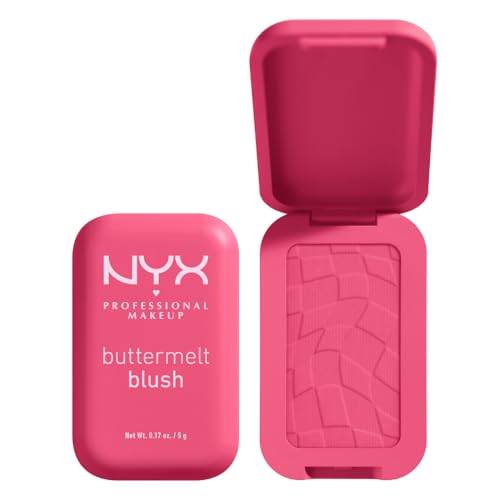
| NYX PROFESSIONAL MAKEUP Buttermelt Powder Blush | Pressed powder | Manufacturer states up to 12HR wear, fade and transfer-resistant, 12 shades in soft matte and glowy finishes | Check Price on Amazon |
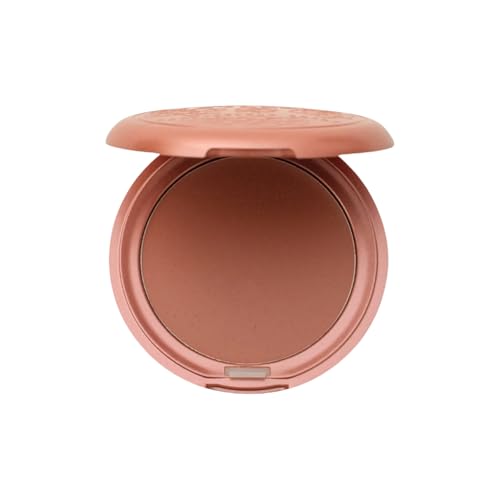
| Stila Convertible Color Dual Lip & Cheek Cream Blush (Lillium) | Cream, lip-and-cheek | Brand describes a creamy, sheer, translucent tint that is non-greasy | Check Price on Amazon |
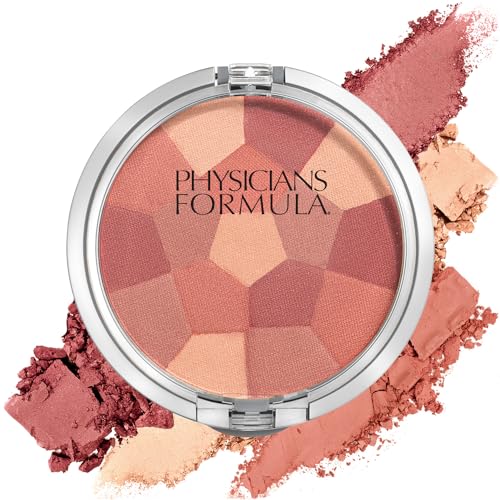
| Physicians Formula Powder Palette Multi-Colored Blush | Pressed powder mosaic | Brand describes a multi-shade mosaic swirled together for a dimensional, non-monochrome finish; hypoallergenic per the listing | Check Price on Amazon |
Disclosure: We earn a small commission from qualifying Amazon purchases at no extra cost to you.
As an Amazon Associate we earn from qualifying purchases. This page contains affiliate links, and we may receive a commission if you buy through them — at no extra cost to you.
As an Amazon Associate, we earn from qualifying purchases.
Last Updated: September 2026
Short answer: blush usually doesn't "fade" so much as it gets absorbed, slid off, or wiped away. Powder pigment sitting on top of a dewy foundation has nothing to grip. Skin oil breaks the film. And every time you touch your face, adjust sunglasses, or blot with a tissue, you remove a little more. The fix is structural, not a matter of buying a stronger pigment: build the colour in layers so the top layer isn't doing all the work.
The Problem: Why Cheek Colour Disappears First
Blush occupies the worst real estate on the face. The cheeks are where oil pools mid-day, where a mask or a scarf rubs, and where most people rest their hand while working. Unlike eyeshadow (which sits on a relatively dry, primed lid) or lipstick (which you reapply reflexively), blush is applied once and then forgotten.
There are four common failure modes:
- Absorption. A sheer, emollient formula sinks into a hydrated or freshly moisturised cheek and dilutes.
- Slip. On oily skin, sebum acts as a solvent under a powder layer and the pigment migrates outward and downward.
- Transfer. Pigment moves onto fingers, phone screens, collars and pillow-adjacent surfaces.
- Burial. Setting powder, setting spray or a later touch-up of concealer applied over blush mutes it visually without technically removing it.
The Step-by-Step Long Wear Blush Routine
This is the layering sequence that solves absorption and slip at the same time. It works with products you may already own.
- Let skincare finish absorbing. Applying colour onto a still-tacky moisturiser guarantees dilution. Give it a few minutes.
- Mattify only the cheeks if you're oily. A thin veil of translucent powder on the cheek area before blush gives pigment something dry to grab.
- Lay down a cream layer first. Cream blush deposits pigment that binds to the skin and foundation rather than resting on top of it. This is the anchor.
- Press, don't sweep. Sweeping drags product off. Tapping and pressing leaves more behind.
- Set with a powder blush in a similar tone. The powder layer absorbs surface oil and reinforces the colour. This is the layering cream and powder blush method, and it is the single highest-yield change most people can make.
- Blot rather than powder over the top. A clean tissue pressed onto the T-zone removes oil without burying your cheek colour.
- Carry the smaller of your two blushes for a mid-day press. Even a strong routine benefits from ten seconds of reinforcement.
If your blush disappears on oily skin specifically
Skip cream entirely on the days your skin is running hot, and go powder-on-powder: mattify, then build the pigment in two thin passes rather than one heavy one. Two thin layers cling better than one thick deposit that sits loose on the surface.
Tools and Products You'll Need
Below are the three blushes in our research set for this page, each mapped to a step in the routine above.
NYX PROFESSIONAL MAKEUP Buttermelt Powder Blush — Best for the wear-time layer of a long-wear routine
This is the pick for step five because its listing makes an explicit longevity claim: NYX states up to 12 hours of wear for the NYX PROFESSIONAL MAKEUP Buttermelt Powder Blush and describes the formula as fade and transfer-resistant [S5]. Treat that as the manufacturer's own claim, not a figure verified here — but it does tell you what the formula was designed to do, which is exactly what you want sitting on top of a cream base.
The listing also notes the powder is infused with mango butter, almond butter and shea butter [S5]. Reasoning from that: butter-containing pressed powders generally press denser and blend with less edge, which is a plausible explanation for why the brand describes it as blending "like butta." That's an inference from the stated ingredients, not an observation.
Strengths: a stated up-to-12-hour wear target, transfer resistance per the listing, 12 shades across soft matte and glowy finishes, and a vegan, PETA-acknowledged cruelty-free formula [S5].
Worth knowing: the supplied listing information does not state pan size, ingredient list beyond the named butters, or any independent verification of the 12-hour figure. If you want a glowy versus matte finish, you'll need to check the individual shade description, since both finishes exist within the range [S5].
Stila Convertible Color Dual Lip & Cheek Cream Blush — Best for the cream anchor layer and for touch-ups away from a mirror
Step three needs a cream, and this one is built for exactly that job. Stila describes it as a creamy, sheer, translucent tint that leaves cheeks radiant and, notably, as non-greasy [S3] — the greasiness question matters, because an oil-heavy cream under powder is what causes the whole stack to slide.
The brand's own application instruction is telling: press your ring finger into the cream, rub against the thumb to warm the colour, then tap it into the cheeks blending outward and upward, or use a firm blush brush [S3]. That warm-and-tap method is the same press-don't-sweep principle from step four, straight from the manufacturer. It also doubles as lip colour [S3], which makes it the practical choice to keep in a bag for a mid-day press.
Strengths: designed for both lips and cheeks, sheer and buildable, and the brand publishes a clear finger-application technique that suits blending into foundation [S3].
Worth knowing: "sheer" and "translucent" [S3] mean this is a layering product, not a one-swipe payoff — if you want intensity from a single application, this format will frustrate you. The supplied listing information does not state a wear-time rating, so treat it as the anchor beneath a powder rather than a standalone all-day solution.
Physicians Formula Powder Palette Multi-Colored Blush — Best for sensitive skin and for dimensional, non-monochrome colour
A mosaic pan addresses a subtler version of the flatness problem: cheek colour that reads as one obvious block of pigment. Physicians Formula describes this as a blend of complementary hues you swirl a brush across, producing a soft, dimensional natural finish without a monochrome cast [S4]. The supplied listing for the Physicians Formula Powder Palette Multi-Colored Blush does not describe how the colour behaves as it wears off, so we can't tell you that.
The listing states the product is hypoallergenic and blends easily without irritation, and positions the wider Physicians Formula range as made for sensitive skin and eyes without harsh additives [S4]. If reactive skin is the reason you've avoided layering products on your cheeks, that's the relevant claim here — attributed to the brand.
Strengths: multi-shade mosaic for a non-flat finish, works applied alone or over other makeup with a kabuki or blush brush per the listing, and a hypoallergenic positioning [S4].
Worth knowing: the supplied listing information does not state a wear-time figure or transfer resistance for this palette, so if maximum longevity is your only criterion, the NYX listing is the one that makes that claim [S5][S4]. "Hypoallergenic" is the brand's own designation and is not an independent certification.
Tips for Best Results
- Match the cream and powder tones loosely, not exactly. A slightly deeper cream under a lighter powder gives depth as the top layer wears.
- Use a firm brush, not a fluffy one, for the powder step. Stila's own guidance calls for a firm blush brush for its cream [S3]; the same density helps press powder into a cream base rather than dusting it across the surface.
- Apply blush before setting spray, not after. Spraying over freshly applied powder blush can dissolve and move it.
- Reapply at the point of failure, not on a schedule. If you're gone by 1pm, that's your cue to add the mattifying step, not to add more pigment at 9am.
Common Mistakes to Avoid
- Applying blush over damp foundation. The pigment sinks in and the colour reads muddy within an hour.
- Sweeping repeatedly to "blend." Each pass removes more than it blends. Tap, assess, then blend the edge only.
- Treating one heavy layer as insurance. Loose surface pigment is the first thing to transfer.
- Assuming a wear claim is a guarantee. NYX's up-to-12-hour figure is the manufacturer's claim for its own formula [S5]; your oil production, climate and base products all sit underneath it.
- Powdering the cheeks after blush to "set" it. That's step four's burial problem — blot instead.
How We Research
This website does not do hands-on testing, and nobody here has worn, swatched or timed any of these blushes. What we did do is read each product's Amazon Creators API verified product record and every published listing feature bullet for the three ASINs above, retrieved 10 September 2026, then compared what each brand actually commits to in writing — wear-time claims, finish, format, ingredient callouts and application instructions — against the specific failure modes described in this guide. Where a listing is silent on something (pan size, ingredient lists, wear ratings), we say so rather than filling the gap.
Final Verdict
If your blush is gone by lunchtime, change the routine before you change the product. Cream first, powder second, blot rather than re-powder.
That said, if you're buying one thing to attack longevity directly, the NYX PROFESSIONAL MAKEUP Buttermelt Powder Blush is the clearest fit, because NYX publishes an explicit up-to-12-hour, fade-and-transfer-resistant wear claim for it [S5] — which is precisely the job the top layer of a layered routine has to do. The supplied listings for the Stila Convertible Color Dual Lip & Cheek Cream Blush (Lillium) and the Physicians Formula Powder Palette Multi-Colored Blush do not state wear-time ratings for comparison. Pair it with the Stila Convertible Color Dual Lip & Cheek Cream Blush as your anchor layer, since Stila describes that formula as creamy, sheer and non-greasy [S3] and publishes a warm-and-tap application method [S3]. If your skin reacts to layering, the Physicians Formula Powder Palette Multi-Colored Blush is described on its own listing as hypoallergenic and as blending easily without irritation [S4].
Related Resources
- How to build a long-wear base for oily skin
- Cream vs powder formulas: how to choose
- Blush placement by face shape
- For general consumer product safety and recall information, see the CPSC [S1] and USA.gov consumer protection [S2].
Sources & Methodology
No blush on this page was applied, worn or timed by anyone here — this site runs no lab and does no physical product testing, and we'd rather say that plainly than dress up a spec sheet as experience. The research behind this guide consisted of reading the Amazon Creators API verified product records and the full set of published listing feature bullets for the three ASINs discussed, all retrieved 10 September 2026, and reasoning from what each brand does and does not commit to in writing. For cosmetics specifically, that's enough to tell you what a formula was engineered to do — a stated wear target, a sheer versus pigmented finish, a transfer-resistance claim — but it cannot tell you how a shade behaves on your undertone or how long it survives your particular skin, so treat the published claims as design intent and the layering routine as the part you control.